Guitar: E 6/9 in the Changes
Where E 6/9 sits once the key is named, and what this seat is responsible for while it sounds.
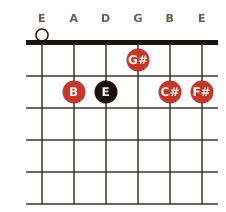
E 6/9 is E – F# – G# – B – C#. Naming the notes is where a chord chart stops. A tune asks the next question instead, and that is the one this page answers.
Nine times in ten a chart puts E 6/9 in the tonic's place, and the subdominant after that — so before working out a voicing, work out which key makes it that, because the key decides which notes the rest of the group has already taken.
The guitar seat carries the comp — the changes stated in three and four notes behind whoever is playing the melody, which in practice means dropping the root and playing the notes nobody else is covering — the third and the seventh first, everything else only if it fits under the hand.
Every shape is drawn for EADGBE across 6 strings, the open ones first and the movable ones up the neck after them, and each one plays back so you can hear the voicing before you commit it to a chorus.