Electric Bass: E m(maj7)add11 in the Changes
Where E m(maj7)add11 sits once the key is named, and what this seat is responsible for while it sounds.
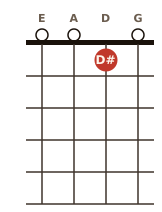
E m(maj7)add11 is E – G – A – B – D#. Naming the notes is where a chord chart stops. A tune asks the next question instead, and that is the one this page answers.
Nine times in ten a chart puts E m(maj7)add11 in the minor tonic's place — so before working out a voicing, work out which key makes it that, because the key decides which notes the rest of the group has already taken.
The electric bass seat carries the amplified bottom — the same harmonic duty as the upright, played with a fingerboard that answers back and a sustain the room can hear over a backbeat. The chord tones are the same ones the upright would choose; what changes is that a note can be held through the bar instead of dying, so a line can lean on a chord rather than announce it.
Every shape is drawn for EADG across 4 strings, the open ones first and the movable ones up the neck after them, and each one plays back so you can hear the voicing before you commit it to a chorus.